
It is a great privilege for me, a joy in fact, to join in celebrating the 50th anniversary of the Cushwa Center for the Study of American Catholicism. As one of the few remaining of those who first gathered at Notre Dame’s Morris Inn and across the street in the Center for Continuing Education, I would like to share some memories of the early days. I do so cautiously, knowing that memory does not always make for good history.
I graduated from Notre Dame in 1960, a history major with no clear vocational direction. I had switched from accounting to history in my junior year. I loved American history and American politics, and John Kennedy from my home state of Massachusetts was running for president. I had the good fortune to be among a group of seniors spotted by generous faculty who encouraged Notre Dame students to consider academic careers. We filled out applications for fellowships and I was offered one by the Woodrow Wilson Foundation, which was dedicated to overcoming a perceived shortage of professors. So, in the absence of any career plan, I went off to the University of Rochester, all expenses paid, to continue reading about American history. In short order three things happened that set me on the road to what would become the Cushwa Center.
When I arrived in town I found a newspaper, checked out rooms to rent, and knocked on a door near the university. The couple who took me in were members of the local Catholic Worker community. They introduced me to the movement, the writings of Dorothy Day, and local issues of social and racial justice. For the first time I encountered serious Catholic ideas about American political and social questions. Perhaps I had not been paying attention at Notre Dame.
At the same time, in my first research seminar, we joined one of the professors, Glyndon Van Deusen, in exploring the life of Lincoln’s secretary of state, William Henry Seward, whose papers had recently been discovered in an upstate New York home. As the resident Catholic, I was assigned to work on an 1840 episode when the mostly Catholic immigrants in New York, led by a fiery young Irish American bishop, John Hughes, responded to then-Governor Seward’s expression of concern about the education of immigrant children by organizing a campaign to get public support for Catholic schools. At one point the bishop even appointed some candidates to run for the State Assembly. This was about American Catholic history—not Church history about Catholic institutions and clerical personnel, but American history being made by Catholics—and it felt brand new. My paper on “the school question” became the basis for my first academic publication, an article in the exciting new lay journal CrossCurrents. And, with the encouragement of faculty and grad student colleagues, I decided to write my dissertation on U.S. Catholics in the 1930s.
This was American Catholic history—not Church history about Catholic institutions and clerics, but American history being made by Catholics—and it felt brand new.
The third experience at Rochester that shaped my career was the result of my interest in politics. A Notre Dame graduate who preceded me at Rochester warned me that the history faculty were unfriendly to Catholics. My experience was very different, probably because Kennedy’s arrival as president and the widespread interest in Pope John XXIII and later Vatican II (1962–65) made Catholics interesting and important. The faculty asked me a lot of questions about Catholicism, which meant I had to broaden my knowledge of such matters. In addition, my community of history graduate students was dominated by smart young people who were political activists. They found me something of a political innocent. Like my new Catholic Worker friends, they took me in hand to learn about civil rights, economic democracy, and Cold War strategies.
By the time I left Rochester in 1964, I was engaged with Catholicism, American Catholic history, and the politics of my communities and country. The best job offered was at a Jesuit college in Montreal. Five years later, I moved to the College of the Holy Cross in Massachusetts. When I finished my dissertation, I took a chance and sent it to Oxford University Press where it was assigned for assessment to Francis L. Broderick, whose Harvard thesis on Msgr. John A. Ryan had just been published. He not only recommended publication but also became a lifelong friend.
At about that time I attended my first meeting of the American Catholic Historical Association. At a reception I was approached by Father Henry J. “Harry” Browne, who checked my name tag and began expressing his dislike of my mildly critical comments on earlier Church historians in that CrossCurrents article. Browne took me by the arm and led me across the room to another distinguished-looking priest who turned out to be Msgr. John Tracy Ellis, the “dean” of Catholic historians in the United States. Browne spoke, loud enough to be heard around the room: “Here, Tracy, I told you that article was written by a half-assed graduate student and here he is!” Msgr. Ellis laughed, asked me about my work, and said he would be glad to take a look at anything I’d like to share. At that same meeting I met for the first time Phil Gleason, who had been a graduate student when I was at Notre Dame.
In that decade of the Second Vatican Council and the “long sixties” I became part of what some referred to as the Catholic Worker, CrossCurrents, Commonweal network. In Worcester, another series of “small providences,” like Oxford’s assignment of Frank Broderick, drew me into work with Catholic social ministry and eventually to the Catholic Committee on Urban Ministry (CCUM) headquartered at Notre Dame. There I was able to chat with Phil Gleason. At CCUM Board meetings I often sat next to Patricia McNeal, a budding historian and peace activist who would eventually marry another emerging young historian, Jay P. Dolan. I met Jay when, as a doctoral student at the University of Chicago, he was researching parish life in 19th-century New York while living at the rectory of first-rate historian and energetic social rebel, that same Harry Browne.
Jay came to Notre Dame, where his wife Pat was my friend in CCUM, Phil was already a well-respected historian and regarded by many as the most reliable context-setter in discussions of American Catholicism, and I was around occasionally, engaging in the politics of the American Church through CCUM. The “long sixties” may have ended in 1973, but Catholics were more active than ever discussing ecclesial mission and ministries in a country and Church that were changing dramatically.
A Catholic celebration of the American bicentennial
In 1974, I was asked to serve on the committee of the National Conference of Catholic Bishops that was organizing a Catholic celebration of the American bicentennial. Many historians joined in producing weekly columns for the Catholic press and advising on local celebrations. I helped with a two-year program of hearings and discussions across the country on how Catholics might help achieve the American promise of “liberty and justice for all.” In 1976, I took leave from my position at Holy Cross to work full time helping to summarize the results of that consultation and to prepare draft recommendations for consideration at the October 1976 Call to Action Conference, the first and so far only official convention sponsored by the U.S. bishops to bring together clergy, religious, and lay American Catholics to discern questions regarding the future of the Church.
All this was going on as Jay Dolan was organizing at Notre Dame what would become the Cushwa Center for the Study of American Catholicism. A growing number of scholars, including Broderick, Dolan, Gleason, McNeal, and myself, were convinced that Catholics had helped make American history. Their story—our story—needed to be better known. There were other American historians interested in our work and other Catholics for whom it seemed helpful as they pursued ministries in and for the American Catholic community. And we all believed that American Catholics, if they knew that story better, could continue to share full responsibility for the promises and possibilities of American life.
Dolan, like his mentor Martin Marty, recognized the need for intelligent public dialogue in American religious communities.
We joined mentors like Msgr. Ellis, Father Thomas McAvoy, C.S.C., and Annabelle Melville in studying American Catholics. Priest-scholars like Ellis and Browne had been trained not in American history but in the disciplines of theology and Church history, and they taught in seminaries. Some of us—academic historians, mostly—met at gatherings of the American Catholic Historical Association. The ACHA was a fine professional organization whose members covered Christian and Catholic history at every time and everywhere. Dolan saw the need for something more. He had studied as a seminarian at the Pontifical Gregorian University in Rome before eventually enrolling as a doctoral student at the University of Chicago under Martin Marty, who perhaps more than anyone else saw the importance of organized support for intelligent public dialogue in American religious communities.

Dolan, and later another Cushwa director trained by Marty, Scott Appleby, brought to Notre Dame an interest in the politics of knowledge—and the politics of religion—in church, society, and higher education. Dolan understood that there was a small-p politics of knowledge, which involved the need for mutual support, for resources for research, for publications to bring that research before academic and other publics, and for networking with decision-makers in order to sustain the growing field of American Catholic studies. Notre Dame responded positively. With the support of Phil Gleason and other friends, he launched the Center for the Study of American Catholicism. He soon found personal and financial support from the Ancient Order of Hibernians and the generous Cushwa family.
As Cushwa got started, we were excited about our work on Catholicism in and for and with America. The Church at the highest levels was insisting that the pursuit of justice and peace was an integral element of Christian faith, and American religious communities with few exceptions seemed to emerge from the disputes of “the long sixties” with a shared understanding of civic responsibilities, even if divisions about how those were to be carried out were also growing. For Catholics in the mid 1970s, those questions were in the open, debated widely, and given an edge by the shared conviction that how America turned out really mattered—and religious communities shared responsibility for its history. The civil rights coalition had unraveled after the assassination of Martin Luther King Jr., the public authority of mainline Protestants had faded, and the focus was more and more on white evangelicals, from President Carter’s witness at the center to growing mobilization for conservative causes. Catholics were engaged in those discussions. Catholic community and labor organizations advocated for social justice; Msgr. Geno Baroni served in the Carter administration’s office of community development, while some reliably progressive Catholics would soon become “Reagan Democrats,” opening up vigorous debates. In the very years that Cushwa was taking shape, the U.S. Catholic Church reached a climax of a post-Vatican II effort at broadening consultation in the life and work of the American Church. That process of dialogue and shared responsibility persisted into the 1980s with the writing of national pastoral letters on race, war, and economic justice.

All this meant that there was a lot of interest in the Catholic community and in the work we were doing on its history. We were mostly historians, but there were plenty of scholars in theology and religious studies. Theologians engaged religion from the inside. Among Catholics, they were involved with complex issues of doctrine and discipline within the Church. Religious studies scholars stood back a bit and looked at religion with tools available from several disciplines. The theologians, religious studies scholars, and historians at Cushwa were all variously engaged in trying to understand the American Catholic experience, with many of us also trying to help our American Catholic community understand and responsibly respond to changes taking place around us. Earlier seminary-based Church historians brought critical, document-based research to the intellectual and pastoral life of the Church. Our work was increasingly interdisciplinary, with theologians and Church historians enlisting the help of social scientists to contextualize devotions, practices, and teachings, and we American historians of Catholicism welcoming the assistance of theologians to help us better understand—and respect—popular religion and ecclesiastical policies and politics.
But tension between theology (and the Church) and religious studies (and the university) was all around, and as our American Catholic world changed dramatically, that tension became important for all sorts of Catholic studies. Catholic intellectuals (and artists) who cared about the community of faith had to ask: Are we scholars inside our Catholic community helping our people think about faith and our shared responsibilities? Or are we scholars like others in our profession and our “field,” observing and analyzing Catholics and Catholicism? We all thought about that, and the Catholics and Christians among us tried to be both faithful disciples and good citizens in church, society and, in our case, the university. Led by Jay Dolan and Notre Dame, Cushwa offered opportunities to talk about all this, and many people who were not Catholics accepted our invitation to help. As they became partners, wider questions of academic and social responsibility emerged. No one needs a reminder that such questions are still with us today.
You don’t have to be a culture war militant to appreciate the classic advice: “Don’t mourn, organize!” That was true in the days of the immigrant church. It was true when lay leaders and connected priests formed the ACHA and it was true when Jay Dolan discovered 19th-century New York parish organizing while living with a community organizer priest-historian. It was true when the Cushwa Center catalyzed support for professional archives, research on the histories of women religious, scholarly attention to the experience of neglected communities—the list could go on. Tenure-track positions for scholars interested in Catholic subjects, centers for Catholic studies at colleges and universities, and financial support for major research projects all are born and sustained by political work, often in coalition with others, on campuses and multiple public squares. Now opportunities for dialogue between scholars and pastoral leaders are few, and, while the country’s religious and political landscape has changed, Catholic studies—multidisciplinary and enriched by long-marginalized voices—continues to provide rich resources for ever more diverse publics. Older subcultures are gone, but the yearning for communities of “faith and friendship,” alert to personal meanings and shared responsibilities, is evident everywhere. We found one such community in the Cushwa Center. Sustaining and multiplying such communities may be now, as it was then, a matter of importance not just for the recovery of American Catholic history but also for the making of that history.
A great cloud of witnesses
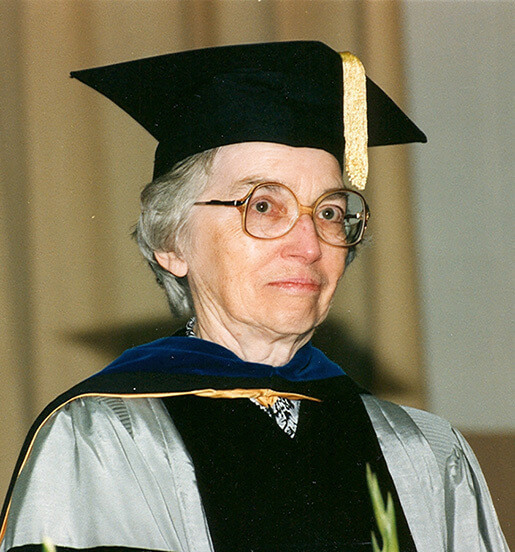
Across the projects, conferences, and seminars that comprised the Cushwa Center’s activities and early network, we all had multiple interests, and we all belonged to a variety of coalitions. Dolan himself became a respected leader in immigration and ethnic studies. He was the first Notre Dame faculty member to serve as president of the once-Protestant American Society of Church History. His work benefited from friendships with leaders of urban ministry like Father Browne as well as Msgrs. Geno Baroni and John Egan. James O’Toole, before becoming a full-time historian at Boston College, was a diocesan archivist who helped his colleagues to develop better national policies on the preservation and use of diocesan records. His leadership sparked remarkable expansion of archival preservation among religious orders of women, making amazingly valuable resources available for historical scholarship. Peter D’Agostino, taken from us far too young, pushed us all to pay attention to transatlantic contacts. Historians James Hennesey, S.J., and Gerry Fogarty, S.J., linked us to Jesuit scholarly networks. Sister Alice Gallin, O.S.U., a first-rate historian and early Cushwa participant, served as executive director of the Association of Catholic Colleges and Universities. She, along with Pat McNeal, Leslie Tentler, Mary Jo Weaver, and historians of women religious led by Karen Kennelly, C.S.J., opened new doors—first, to the history of women in the Church, then to feminist interpretations of American Catholic life and history. Cushwa lent support to pioneering work on African American history, led by Cyprian Davis, O.S.B., and on the history of Hispanic Catholics, led by Timothy Matovina.
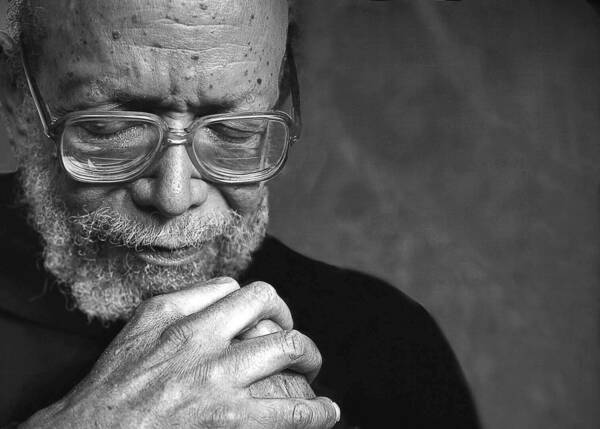
As I have grown older I have become ever more convinced of the central importance of the experience of Hispanic and African American Catholics in understanding the trajectory of U.S. Catholic history. Their work and that of their colleagues made us more aware of the limits—but also the importance—of our work on Euro American Catholics. Across all these areas, multiple generations of scholars were and are indebted to Christopher Kauffman as longtime editor of the U.S. Catholic Historian as well as of the six-volume Bicentennial History of the Catholic Church in America (1989) and the nine-volume American Catholic Identities: A Documentary Reader (1993–2003).
The Cushwa Center became more than a mutually supportive club of academics interested in U.S. Catholic history. As Cushwa emerged, we enjoyed the privilege of having an audience for our work and a shared sense that what we were doing mattered—including working out our disagreements. The challenges to our field were addressed, and there were differences—sometimes sharp differences—among us. I recall a session where young theologian Michael Baxter, with a newly minted Ph.D. from Duke, systematically critiqued the “Americanism” of Dolan, Gleason, and O’Brien as we, his targets, sat shoulder to shoulder in the front row. Or young Jim Fisher, fresh from Rutgers, telling us why hippie writer Jack Kerouac belonged with Thomas Merton as a guide to the movement of American history. There was a lot of politics around Cushwa, at Notre Dame, and at the ACHA regarding questions of ecclesiastical governance, Catholic universities, and faith-related scholarship.
Phil Gleason’s essays are still the best help for understanding the changes that took place in American Catholicism during our lifetimes.
Disagreements were themselves fruitful, especially in the context of sustained friendships. For most of our careers, for instance, Phil Gleason and I went back and forth about the balance of American and Catholic. Phil was a highly respected scholar in American intellectual and social history. His work helped clarify important issues in these fields, and his essays were and remain the best help for understanding the remarkable changes that took place in American Catholicism during our lifetimes. But in those early years we probably experienced a modest amount of the tension that later divided our Church. I leaned a little more American, Phil a little more Catholic. I welcomed “renewal and reform” with an emphasis on the social or public mission of the Church. Phil was more cautious, wondering whether the community could remain united and faithful if we adapted too quickly, even carelessly, to the “secular” society around us. He respected the “justice and peace” emphasis that Jay, Pat, and I brought, while we respected the emphasis on continuity and subcultural solidarity that informed Phil’s contention with modernity.
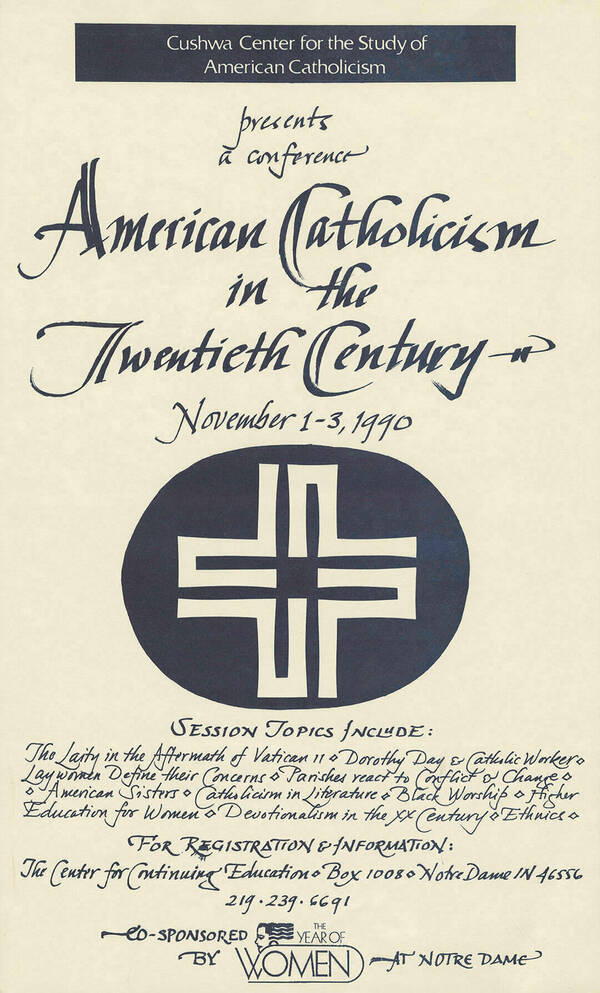
For me, my friendship and lifelong dialogue with Phil reflected ongoing issues in American and American Catholic history. He, and the rest of us, were discovering, describing, and for the most part admiring the American Catholic subculture of which we were a part. Some saw changes in the American Church emerging from the Second Vatican Council, and they were right, of course. This understanding fit with well-constructed ideas of the Church standing within but somewhat apart from the larger culture; “certain and set apart” was the frame set by James Hennesey. Others saw change coming from American culture, as differences about race, war, and eventually gender and sexual orientation stirred the country and disrupted subcultures, including ours. This also seemed right. It was “the sixties,” after all, and this interpretation made sense of open conflicts stirring on college campuses, in the streets, and in families. The combination of these two sources of change, church and society, set the context for our formation as scholars and teachers.
Phil and Jay understood all that and drew the threads together as a transformation of the American Catholic community, as working class, immigrant Euro American Catholics experienced mobility from city neighborhoods to automobile suburbs, from economic hardship to middle-class security, from social and political outsiders to fully “American” insiders. Historian Timothy L. Smith made sense of the data supplied by sociologist and priest Andrew Greeley when he analyzed ethnic formation around religious congregations as arising from “folk memories brought to bear on new aspirations” (Smith 1978, 1161). For Phil Gleason this meant an Americanization process arising from those aspirations provided the context for understanding what was happening in the American Catholic community. Change came not just from the outside—the Council and “the [secular] sixties”—but from within as well.

Phil and many in the Cushwa community, including the very influential Robert Orsi, who arrived among us a little later, were uneasy with what they took to be our too easy adaptation to American culture. They were not “culture warriors”—that came later—but neither were they uncritical Americanists. Phil’s uneasiness stemmed from Catholic faith and from the scholastic philosophy that framed that faith for many Catholic scholars and intellectuals. I, on the other hand, was and remained what Scott Appleby later called a neo-Americanist. I felt that the desire for full participation was liberating. Our history was for many families (though far from all) an experience of genuine liberation, ambiguous and complicated, but overall a good thing. It brought with it new opportunities and responsibilities, and I thought those shared responsibilities should inform our deliberations at Cushwa, at CCUM, and at my Holy Cross. One big question then and now is how to support similar, realistic (and thus complicated) liberation, for those left out and left behind? And the other question, integrally related to the first and central for us, is: After liberation, what? If I were a bit younger I would try to set that as an agenda in Catholic studies.
One lesson of our recent history is that dialogue and deliberation are far from easy. We were not culture warriors by any means, though at times I thought I saw Michael Novak, Richard Neuhaus, and George Weigel smiling as Phil spoke, and I know that Phil and others saw behind me the Berrigans and Michael Baxter ready to spring into the arena. There was an innocence about many of us, recognized as such not just by evangelical radicals like Baxter or ecclesiastical conservatives like James Hitchcock, with whom I once had a friendly public debate, but also by many of our lay and vowed religious women colleagues. Still, that taken-for-granted solidarity and respectful dialogue about differences were part of the world of Cushwa before divisions deepened with the politics of the abortion question, the sex abuse crisis, the status of women in our Church, and even a national and not-so-friendly debate about whether Notre Dame, and graduates like me, were really Catholic anymore.
Our innocence 50 years ago, our sense of shared responsibility for our own Catholic community, for our country, and for our ever-more interdependent world, was a gift given us by mentors like Ellis and Marty and others. That remarkable (if always imperfect) version of solidarity was a gift we all hoped to pass on to those who came to Cushwa after us. Perhaps it was the bicentennial that sustained for us a certain faith-filled innocence about the trajectory of American and American Catholic history. Now, 50 years later, I think others of my generation would join me in praying that as Cushwa celebrates its anniversary, participants will find, perhaps with a deeper realism, something of the same excitement we knew in the study—and at least a little bit of the making—of American Catholic history. Today, the future is not what it used to be. May the Cushwa Center’s network today find together something of what we found: a future worth living and working for and communities of faith and friendship that will help you make sense of your vocations. Here as everywhere, secular or religious, hope and faith are related and love actually matters.
David J. O’Brien is professor emeritus of history at Holy Cross College in Worcester, Massachusetts, where he held the Loyola Professorship in Roman Catholic Studies. He is the author of Public Catholicism and Isaac Hecker: An American Catholic, among other books, and co-editor of Catholic Social Thought: The Documentary Heritage.
This article appears in the spring 2025 issue of the American Catholic Studies Newsletter.