Liberation theology has been the most renowned, discussed, and studied theological movement in Latin America. However, in the years following the Second Vatican Council (1962–1965), an alternative and original theological perspective emerged in Buenos Aires, Argentina, and its surrounding areas. This theology sought to implement the principles of the Council within the regional context, particularly among the poor. Initially referred to as the theology of culture, it later became known as the Argentine theology of the people, or more simply, the “theology of the people” (teología del pueblo).
Developing in parallel with liberation theology, the theology of the people lasted for over 50 years in Argentina, but globally remained largely under the radar until the pontificate of Pope Francis.
Developing in parallel with liberation theology, the theology of the people lasted for over 50 years in Argentina. Despite its longevity and ongoing influence, it remained largely under the global radar until the pontificate of Pope Francis (2013–2025), who brought renewed attention to its ideas and practices.
Considering the global renown of the theology of the people thanks to Pope Francis, this article aims to offer a concise overview of the origins and core elements of the theology. First, it explores the pastoral initiatives developed over the past half-century and examines their continued relevance in the region where the theology first emerged. It also considers the spread of this popular pastoral ministry approach into Argentine social movements and organizations. Second, the article summarizes the principal contributions of this theological current to the broader Latin American Church, particularly through its influential role in shaping official ecclesial documents.
The 1960s were a period of intense ferment in Argentina, marked by the emergence of various ecclesial movements, pastoral groups, and social initiatives within the Church. Immediately following the conclusion of the Second Vatican Council, the Argentine Episcopal Conference established a commission of experts to implement its teachings, particularly among the poor. This gave rise to COEPAL (Comisión Episcopal de Pastoral), a body presided over by three bishops and composed of a heterogeneous group of experts.
The commission primarily included priests and other pastoral agents with academic training in theology—and, in some cases, in the social sciences such as sociology and economics. All of them shared a strong commitment to pastoral work with the poor and working-class sectors. The practice of convening experts had been a feature of the recently concluded Council, but it was a novelty within the Argentine Church of the time.
COEPAL remained active from 1967 until the early months of 1973, during which it organized numerous meetings and developed pastoral plans and reports for the Argentine Episcopal Conference. It was within this unique institutional and ecclesial setting that the theology of the people began to take shape.
Although their relationship remains a matter of ongoing debate, the theology of the people is not a branch of liberation theology but rather a distinct and original theological current.1 Among its most notable thematic differences is its emphasis on popular culture and religiosity. Methodologically, it adopts a more historical-cultural perspective, in contrast to the socio-structural analysis typically associated with liberation theology. Furthermore, the theology of the people rejected Marxism early on as an interpretative tool for understanding Latin American reality and the identity of its peoples.
However, it is important to note that these distinctions were not clearly defined in the late 1960s or even throughout the following decade. In fact, the term “teología del pueblo” was only coined much later.2 In what follows, I briefly present key conceptual contributions that help to illuminate the relevance and influence of the movement across various ecclesial, social, and political spheres.
Three prominent members of COEPAL are commonly considered the founding figures of the theology of the people: Rafael Tello, Lucio Gera, and Gerardo Farrell. All three were priests and theology professors at the Pontifical Catholic University of Argentina (UCA), with firsthand pastoral experience among the poor in Buenos Aires and its surrounding areas. Considering their relevance to Pope Francis, I will focus on Tello and Gera. Tello is particularly noted for his theological insights, enduring pastoral initiatives, and their dissemination among social and political movements. Gera, for his part, played a crucial role in integrating elements of the theology of the people into key documents of the Latin American Church.
Tello and popular pastoral ministry
We begin with the relatively little-known figure of Rafael Tello (1917–2001).3 He identified a profound connection between the contemporary culture of the popular sectors (cultura popular) and a distinct Latin American form of Christianity—what he referred to as popular Christianity (cristianismo popular)—which had been shaped historically during the evangelization of the Americas. Tello emphasized the central role of the Virgin Mary, widespread devotion to Marian images throughout the continent, the significance of the sacrament of baptism, and the importance of religious festivals, local shrines, and pilgrimages rooted in the specific traditions of countries, regions, towns, and cities.
The ministry inspired by the theology of the people aims to strengthen this deeply rooted Catholic popular religiosity and to engage culture through the symbolic language of religious images and pilgrimages. For a long time, these expressions of popular religiosity were ignored or even disdained by the ecclesiastical hierarchy, which often considered them inferior forms of religion or mere superstition.
Two central and inseparable concepts in this theology are people (pueblo) and culture. People are formed within history, which is not understood as a mere chronological sequence of events, but as a set of complex processes in which cultural identity is constituted. In this theological reflection, people are not conceived as a philosophical category or metaphysical essence, but rather as a historical subject. The term people simultaneously evokes (a) the “People of God” as articulated in the Second Vatican Council; (b) the Argentine or Latin American people more broadly; and (c) at times, explicitly refers to the poorest sectors of society.
According to Tello, the Latin American people emerged after the conquest of the Americas, when the defeated and subjugated Indigenous peoples embraced the Christian faith and, through baptism, entered colonial society. This initial evangelization marked a unique historical moment in which Christianity became a foundational element of a people’s culture. However, Tello’s original insight lies in the observation that mestizos, Indigenous peoples, enslaved individuals, and other subaltern groups embraced Christianity—but not its association with the colonial system. In other words, a differentiation arises between a core of beliefs and practices drawn from Catholicism, which the people incorporated, and the institutional Church, which represented the established order and from which they
remained distant.
Tello describes what he terms “modern culture,” shaped by the development of capitalism and the Enlightenment, consumer society, the cultural dominance of powerful nations, and more recently, drug trafficking and consumption. This modern culture has consistently denied, marginalized, and even attacked popular culture, which nevertheless continues to endure and resist.
The theology of the people aims to reinforce popular culture and the symbolic language of religious icons, festivals, and pilgrimages as sources of resistance and social cohesion.
He also introduces the concept of ecclesial culture (cultura eclesial), referring to the clergy and ecclesiastical institutions. According to him, this ecclesial culture is neither the only legitimate form nor superior to others in which Christian faith is expressed—particularly among the poor. This brings forth the concept of popular Christianity (cristianismo popular), closely tied to the idea of popular culture already discussed. Tello observed a connection between contemporary working-class culture and a popular form of Christianity in Latin America. He underscored the significance of sacraments such as baptism, the veneration of the Virgin Mary and certain saints, religious festivals, and pilgrimages.
Concurrently, the pastoral popular ministry (pastoral popular) envisioned by Tello focused on restoring and revitalizing the legacy of the first evangelization. In contrast to liberation theology, the theology of the people does not emphasize class-based contradictions—though it does not ignore them—but instead aims to reinforce popular culture as a source of resistance and social cohesion. Rather than promoting the creation of small base ecclesial communities, as liberation theology does, it seeks to permeate society through the symbolic language of religious icons, festivals, and pilgrimages. The birth of Christianity in Latin America occurred through mass celebrations in which the Virgin Mary occupies a central role as a mediator before God.

In 1975, Tello, who was then overseeing youth ministry in the Archdiocese of Buenos Aires, organized the first youth pilgrimage on foot to the Marian shrine of Luján, about 40 miles from the city. The event’s overwhelming success and its annual recurrence to this day testify to the strength of his vision of popular ministry. Today, approximately a million people of all ages and social classes participate in this pilgrimage. Another of Tello’s initiatives was the creation of a seminary to train priests rooted in popular culture. He believed in the importance of having clergy from humble backgrounds, more closely connected to the people than to ecclesial culture.
The then-archbishop of Buenos Aires, Juan Carlos Aramburu, a prelate of markedly conservative orientation, perceived this seminary as a potential threat to ecclesial unity, interpreting it as the emergence of a “popular church.” Consequently, in 1979, he revoked Tello’s ecclesiastical faculties and prohibited him from continuing his teaching at UCA. Rather than resisting or seeking transfer to another diocese under a more sympathetic bishop, Tello accepted the sanction, effectively concluding his public ministry.4
Nevertheless, he persisted in his theological studies and continued to reflect on the underlying principles of his pastoral initiatives, while maintaining close contact with priests engaged in ministry within marginalized neighborhoods and villas miserias in Buenos Aires and its environs. Following the country’s transition to democracy in the 1980s, he established a theological and pastoral study circle that convened weekly at his home, bringing together clergy committed to grassroots pastoral work. Informally referred to as the “Little School” (Escuelita), this group operated discreetly even after his death in 2001.
Subsequent generations of priests in the Buenos Aires region continued his legacy. Among their most distinctive activities are the missions (misiones) in impoverished areas, where large tents are erected in visible public spaces, and the image of the Virgin is carried through the streets. These missions include Masses, confessions, baptisms, blessings, the distribution of devotional objects (holy cards, rosaries, candles), and—equally important—moments of shared life: conversations, meals, and the traditional Argentine ritual of drinking mate with the poor and working class.5 These seemingly traditional practices reflect deep proximity and commitment to the people, countering the alienation often associated with ecclesial culture. In popular ministry, the Latin American people are called to evangelize themselves by deepening the gifts received in the first evangelization.
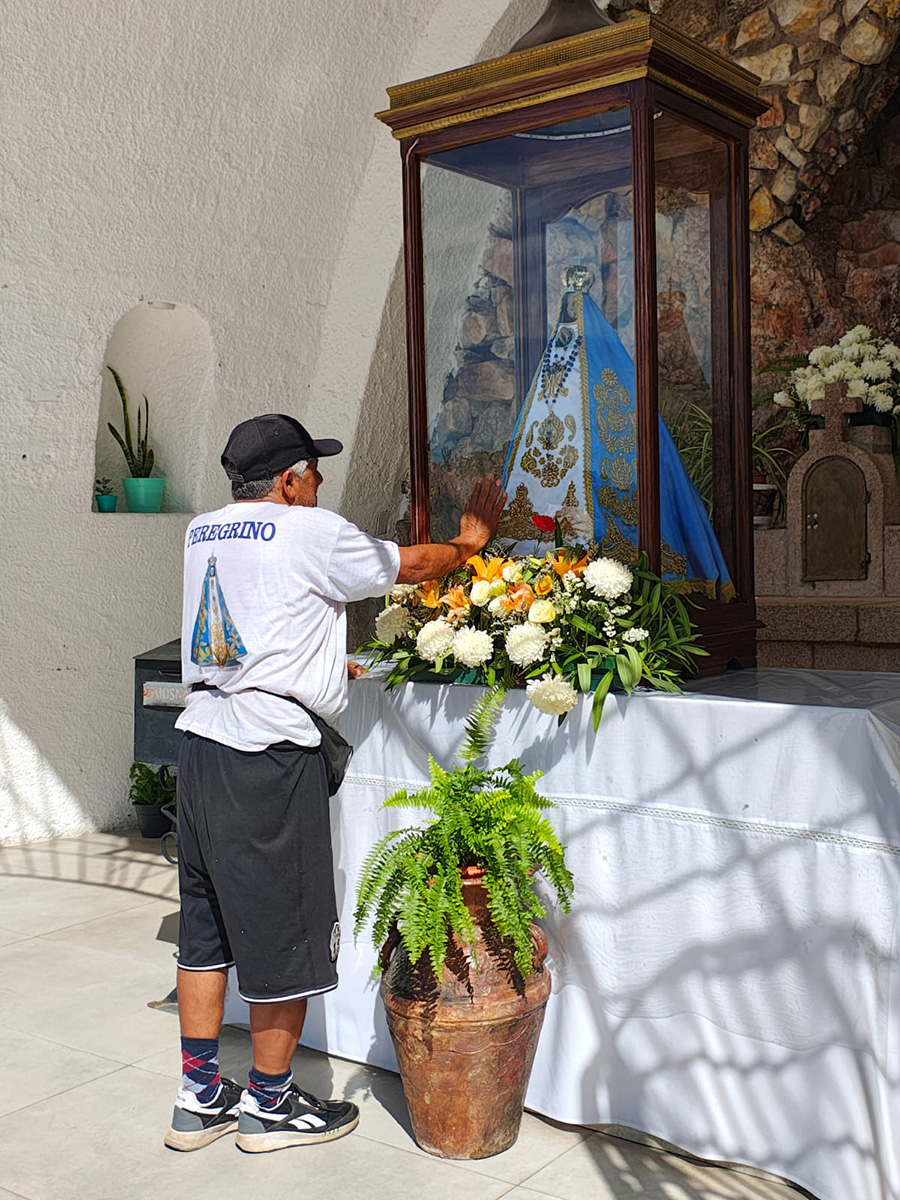
A distinct initiative launched by Tello that continues to this day involves pilgrimages to Marian shrines—not just that of Luján. Priests, accompanied by men from extremely poor backgrounds—often homeless—carry the image of the Virgin of Luján to various shrines across Argentina and other Latin American countries. These pilgrimages, which can last for weeks, months, or even years, have symbolically embraced the continent, reaching distant shrines such as that of the Virgin of Guadalupe. Year after year, these journeys reflect the continental vocation of a theology that emerged in and has remained rooted in Buenos Aires and its surrounding areas.
Another enduring legacy of Tello’s ministry is the strong connection between pastoral agents and grassroots organizations, including social and political movements.6 Although these relationships remained largely underground for decades, today one can observe devotional practices—such as processions carrying images of the Virgin or saints—integrated into the public demonstrations of prominent social movements. Since 2016, movements of the poor and unemployed have pilgrimaged annually on August 7, the feast of San Cayetano (the patron saint of work in Argentine popular devotion), from the sanctuary of the saint to the Plaza de Mayo or Plaza del Congreso in downtown Buenos Aires.7 The procession is preceded by a Mass, the blessing of the saint’s image, and the tools of workers of the informal economy. The image of San Cayetano, accompanied by the Virgin of Luján, leads the march of all participating organizations. Pope Francis’s pontificate—and his engagement with social movements—brought the popular pastoral ministry of Tello into closer alignment with the leaders and members of these movements.
While the above does not exhaust the many ongoing initiatives of popular pastoral ministry, it is also necessary to highlight another key legacy of the theology of the people: its influence on the official documents of the Latin American Church. Even as Tello lived in ecclesial marginality and his followers operated quietly in the poorest neighborhoods of Buenos Aires, the theology that emerged from COEPAL began to leave its legacy in episcopal conferences and documents across the continent.
Lucio Gera and Latin American episcopal conferences
This brings us to another COEPAL member and father of the theology of the people, albeit with a very different profile than Tello: Lucio Gera (1924–2012). A theology professor and later dean at UCA, Gera was also a pastoral expert and advisor to the Argentine Episcopal Conference. He was one of the key proponents of the Council’s reception in Latin America and played a prominent role in the Latin American Episcopal Conferences of Medellín (1968) and Puebla (1979).8
The Conference of Medellín, held in Colombia in 1968 shortly after the Second Vatican Council, devoted one of its sections to popular pastoral ministry. It recognized and validated popular religiosity as a legitimate expression of faith. Popular religiosity was to be supported and enriched, as it represented a starting point for evangelization. While Gera was not the only proponent of this position, the emerging influence of the theology of the people is clear. Never had an official Church document recognized the religious expression of Latin American peoples in such terms.
The reflection on popular religiosity was revisited and deepened at the Conference of Puebla in Mexico in 1979. There, Gera played a leading role in drafting sections of the final document concerning the evangelization of culture. In keeping with the foundations of the theology of the people, he emphasized that popular religiosity is not merely the object of evangelization but, insofar as it embodies the Word of God, it is also an active form through which the people continually evangelize themselves. One could say that it was at this moment that the central themes of the theology of the people gained broader recognition within the Latin American episcopate. Ironically, at the end of that same year, Tello was dismissed from UCA.
The Conference of Santo Domingo (1992) once again addressed popular religiosity and introduced a new concept: inculturation. This neologism refers to the process of integrating and interpreting the Gospel within a specific culture, while respecting its identity and values. In his opening address, Pope John Paul II presented the Virgin of Guadalupe as a “model of inculturation.” The final document characterized popular religiosity as an inculturated form of Catholicism. Lucio Gera remained an eminent professor and a theologian of great renown in Argentina and throughout the region until his passing. His ideas are expressed with notable clarity in the Aparecida document.
Effectively, at the Conference of Aparecida (Brazil, 2007), the theology of the people returned to center stage. This time, the Latin American bishops appointed the archbishop of Buenos Aires, Jorge Mario Bergoglio, to preside over the drafting commission of the final document. Under his leadership, and with the assistance of Argentine theologians Carlos Galli and Víctor Manuel Fernández, popular religiosity was affirmed as both an expression of inculturated faith and an evangelizing force. Drawing directly from the theology of the people, the document stated that popular religiosity contains the most valuable dimension of Latin American culture, as revealed through the depth of its faith. This was the first ecclesial document to introduce the term popular mysticism (mística popular) to describe the piety of the people. This communally rooted mysticism holds within itself a rich potential for holiness and justice.9
From the peripheries of Buenos Aires to Rome
For decades, the theology of the people was developed almost underground, involving small groups of priests and laypeople in the Buenos Aires region. At the same time, paradoxically, some of its core insights opened new pathways for theological and pastoral reflection in the Latin American Church. When Bergoglio was appointed bishop of Buenos Aires in 1998, he brought this popular pastoral ministry to the marginalized sectors of an Argentina immersed in the worst economic crisis in its history. From then on, and despite the subsequent economic recovery, he dedicated himself to organizing a church of the people, for the people, and by the people. Since his inauguration as Pope Francis, its pastoral practices have extended beyond strictly Argentine ecclesial circles into the sphere of social movements and organizations among the world’s poorest.
On a pastoral and symbolic level, Francis continued to place the peripheries—both geographic and existential—at the center. His frequent encounters with popular social movements directly reflected the connection between popular religiosity and social organization. In each of these gatherings, the pope reaffirmed the role of the poor as protagonists of social transformation, stating that “the true actors of change are you, the excluded.” Likewise, gestures such as his public devotion to the Virgin of Luján, his closeness to the Argentine “slum priests” (curas villeros), and his insistence on a “poor Church for the poor” revealed not only a biographical continuity but also a pastoral and theological embodiment of the principles of the theology of the people. As Francis affirmed in Evangelii Gaudium (n. 122): Popular religiosity “is a reality in continual development, where the Holy Spirit is the principal agent. It is not devoid of content, but rather it is an expression of a deep faith, incarnated in the culture, and continues to be passed on.”
What began in the humble neighborhoods of the peripheries of Buenos Aires resonated in the very heart of the universal Church during the conclave. Will Leo XIV continue Francis’s legacy? Has the theology of the people ceased to be a reformist stance for the periphery and become an integral part of the Catholic Church’s theology in the 21st century? As Francis said, to confront the globalization of indifference, our common home, our Church, must not be afraid to look into the eyes of the people and listen to them.
Pablo Forni is a senior researcher at the National Scientific and Technical Research Council of Argentina (CONICET), director of the Institute for Social Science Research (IDICSO) and professor of sociology at the School of Social Science at Universidad del Salvador in Buenos Aires. His research focuses on the role of Pope Francis’s theology in grassroots social movements in Argentina. In the past decade, he has become increasingly involved in interdisciplinary projects about the globalization of the “theology of the people.” During fall 2025, he is a visiting fellow at the University of Notre Dame’s Kellogg Institute.
This article appears in the fall 2025 issue of the American Catholic Studies Newsletter.
Notes
1 There is significant consensus that the theology of the people is a distinct current from liberation theology. Yet Juan Carlos Scannone and others argue for understanding it as an Argentine branch of liberation theology, citing the fact that theologians like Gustavo Gutiérrez and thinkers involved in the theology of the people, such as Lucio Gera, shared common ground at key moments in the 1960s, particularly at Latin American Episcopal Conference in Medellín (1968). The differences between the approaches would become more pronounced in subsequent decades.
2 Juan Carlos Scannone (1931–2019) was an Argentinean Jesuit theologian and professor of the young Bergoglio at the Colegio Máximo de San José in San Miguel. As he explains in his book Theology of the People: The Pastoral and Theological Roots of Pope Francis (published in English in 2020 by Paulist Press), this theology received originally different names such as “Argentinean School of Theology” and “Theology of Culture.” It was the Uruguayan liberation theologian Juan Luis Segundo who first called it “Argentinean Theology of The People” to criticize it. By the nineties, the name theology of the people was firmly established to refer to this original theology.
3 Though a committed intellectual and charismatic speaker, Rafael Tello was notably reluctant to write, even going so far as to remove his name from some published texts. Nonetheless, he left behind a substantial collection of manuscripts, notes, and records of his interventions in various meetings and theological gatherings. A few years after his passing, then-archbishop Jorge Mario Bergoglio expressed his deep admiration for him during the defense of a doctoral thesis at UCA on his theology, recognizing his pivotal role in the pastoral life of the Argentine Church. Since then, a group of priests responsible for preserving his personal archives, organized under the Saracho Foundation, have published several volumes containing many of his previously unpublished writings and audio recordings. Particularly significant among these is El viejo Tello en la COEPAL: Sus intervenciones entre peritos de pastoral (1968–1971), published in Buenos Aires by Editorial Ágape.
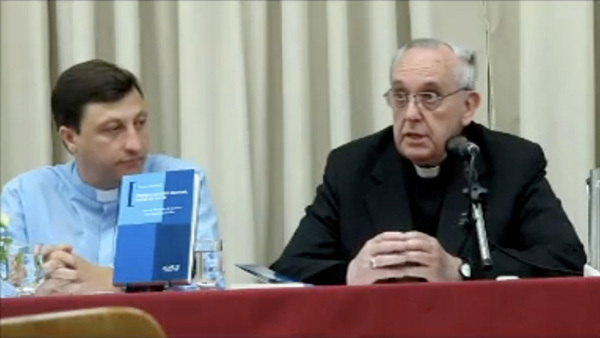
4 Tello’s priestly faculties were formally restored a few days after Jorge Mario Bergoglio assumed the office of archbishop of Buenos Aires in 1998. Bergoglio recalled this in 2012 during the presentation of the first book dedicated to Tello’s theological thought, held at the university where he had been prohibited from teaching. A transcript of the presentation appears in the second edition of Pobres en este mundo, ricos en la fé. La fé de los pobres de América Latina según Rafael Tello, published by Ágape in 2016.
5 Drinking mate is a tradition native to the southern region of South America. Its originates from the interaction between Guaraní Indigenous communities and Jesuit missionaries during the 17th and 18th centuries. Mate is distinctive for its communal nature, as it is an intrinsically shared beverage.
6 Since the 1960s, Father Tello had maintained contact with political leaders and activists of that era. During the 1980s and 1990s, together with several priests involved in popular pastoral work, he organized gatherings with leaders and members of labor unions, community organizations, and political groups. All of this was carried out with a very low profile. Such gatherings—where social and political discussion is interwoven with the study of Scripture, devotion to the Virgin Mary, and the celebration of Mass—have continued to this day.
7 These two squares, adjacent to the headquarters of the nation’s executive and legislative branches, constitute a central space for political activity and serve as key sites for public demonstrations.
8 Lucio Gera was a distinguished professor and a highly influential theologian within the Argentine and Latin American Church, although his written output remained relatively limited. Fortunately, in recent years, the Pontifical Catholic University has compiled two volumes that bring together a selection of his theological and pastoral writings, Escritos Teológico-Pastorales de Lucio Gera (Buenos Aires: Editorial Ágape), vols 1 and 2.
9 The expression popular mysticism was introduced into theological reflection by Jorge Seibold, S.J., based on his experience in popular pastoral ministry. Since 1976, Seibold has promoted the celebration of the Feast of the Lord of Miracles of Mailín in Villa de Mayo, located in the western outskirts of Greater Buenos Aires. This devotion originates in the province of Santiago del Estero in northern Argentina and dates to the 18th century. Each year, thousands of migrants from that province living in Buenos Aires gather for this paradigmatic celebration of Latin American popular piety. For a deeper exploration of popular mysticism, one may consult La mística popular by Seibold, published by Ágape Libros in 2016.